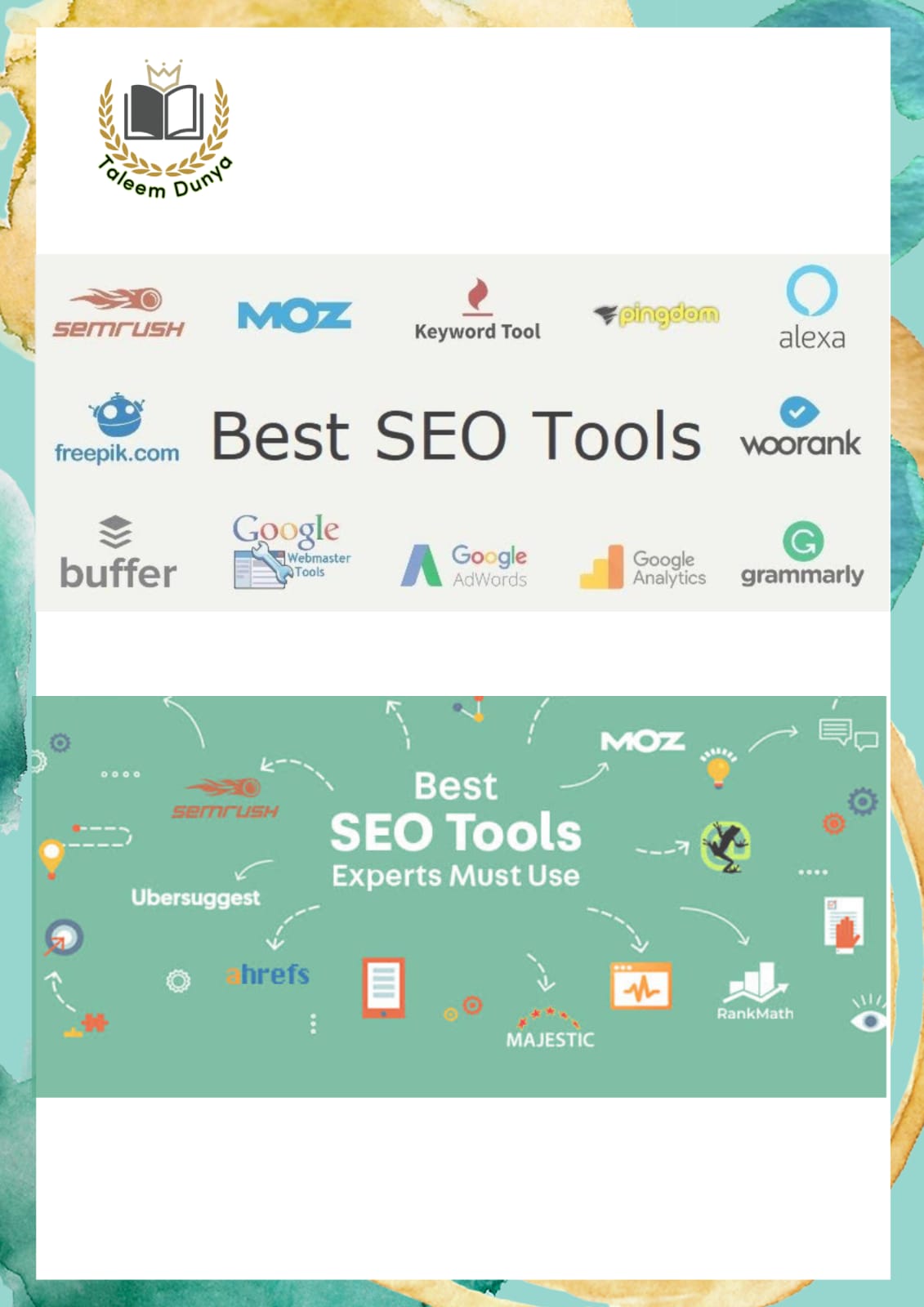
List of SEO tools


SEO tools are software applications or web-based platforms that help website owners and digital marketers improve their search engine rankings and organic search traffic. Here are some examples of SEO tools:

Keyword Research Tools -
help identify relevant keywords and keyword phrases that users might search for to find content related to a specific topic.
On-Page Optimization Tools -
help optimize web pages for search engine ranking factors such as page speed, meta tags, and content optimization.
Link Building Tools -
help find opportunities to acquire backlinks to a website from other relevant websites, which can improve search engine rankings.
Site Audit Tools -
help identify technical issues with a website that can impact search engine rankings, such as broken links, duplicate content, and crawl errors.
Rank Tracking Tools -
help monitor a website's search engine rankings over time and track progress against competitors.
Competitive Analysis Tools -
help analyze the search engine optimization strategies of competitors and identify areas for improvement.
Local SEO Tools -
help optimize a website's local search engine visibility, including citation management, local search ranking monitoring, and Google My Business optimization.
Reporting Tools -
help automate reporting on search engine optimization metrics, including traffic, rankings, and backlinks.
A list of SEO tools:
  • Google Analytics
  • Google Search Console
  • SEMrush
  • Ahrefs
  • Moz
  • Serpstat
  • Ubersuggest
  • Majestic
  • Raven Tools
  • Screaming Frog SEO Spider
  • What is SEO

    SEO stands for Search Engine Optimization. It is a process designed to optimize a website for search engines. It helps websites achieve a higher ranking in search engine results when people search for keywords related to their products and services. So, it is a practice of increasing the quantity and quality of traffic to a website through organic search engine results. See the following image to understand the basic activities involved in the SEO.

    How is SEO different from SEM and PPC?

    SEM and PPC are two other common terms you will read about a lot here on Search Engine Land and hear about in the larger search marketing community. Read on to learn more about both of these terms and how they’re related to SEO.

    How Search Engine Optimization Works?

    Search Engines such as Google have their own algorithm or rules to decide the order of pages to show for a search query. These algorithms determine the rankings of the SERPs based on various ranking factors. However, it gives more emphasis on certain metrics to evaluate the quality of a page and accordingly to decide its ranking.

    Off-site optimization

    There are several activities that may not be “SEO” in the strictest sense, but nonetheless can align with and help contribute indirectly to SEO success. Link building (the process of acquiring links to a website) is the activity most associated with off-site SEO. There can be great benefits (e.g., rankings, traffic) from getting a diverse number of links pointing at your website from relevant, authoritative, trusted websites. Link quality beats link quantity – and a large quantity of quality links is the goal.

    Technical optimization

    Optimizing the technical elements of a website is crucial and fundamental for SEO success. It all starts with architecture – creating a website that can be crawled and indexed by search engines. Experience is also a critical element of technical optimization. Search engines stress the importance of pages that load quickly and provide a good user experience. Elements such as Core Web Vitals, mobile-friendliness and usability, HTTPS, and avoiding intrusive interstitials all matter in technical SEO.

    On-page SEO technique

    On page optimization refers to all measures taken by SEOs within the website to improve the ranking of a site in search engine result pages. These measures are related to content and HTML source code of a page, e.g., meta tags, keyword placement, and keyword density including the technical set-up, the content, and user-friendliness of your site. So, on page seo optimization factors are linked with the elements of your website.

    Keyword Research

    Keyword research involves identifying and selecting the right keywords and phrases that are relevant to your website's content and have the potential to drive organic traffic. Here's how to conduct keyword research.
    Brainstorming:
    Begin with a list of topics and keywords that are relevant to your website, products, or services.
    Use Keyword Research Tools:
    Utilize keyword research tools like Google Keyword Planner, SEMrush, Ahrefs, or Ubersuggest to find keyword ideas, search volume, and competition data. Competitor Analysis: Analyze the keywords your competitors are targeting and ranking for. Long-Tail Keywords: Consider long-tail keywords (more specific phrases) that can attract a more targeted audience. Search Intent: Understand the search intent behind keywords (e.g., informational, commercial, transactional) to align with user needs. Seasonality: Consider whether keywords have seasonal trends that might affect your content strategy.

    Brainstorming

    Begin with a list of topics and keywords that are relevant to your website, products, or services.

    Performance Data:

    Google Search Console provides data on how your website is performing in Google search results. This includes information on search queries that lead users to your site, the number of clicks, impressions, and click-through rates

    Index Coverage

    It shows which pages of your site are indexed by Google and identifies any issues with crawling and indexing, such as errors and warnings

    Sitemap Submission

    You can submit your website's sitemap to Google Search Console, helping Google understand the structure of your website and index it more effectively.

    Mobile Usability

    It provides insights into how mobile-friendly your site is and alerts you to any issues that might negatively impact mobile users' experiences.

    Performance Enhancement

    Google Search Console offers suggestions for improving your site's performance, such as optimizing site speed and fixing mobile usability issues.

    Security Issues

    It notifies you of any security issues Google has detected on your website, such as malware or other vulnerabilities

    Structured Data

    You can check and test structured data (schema markup) on your site, which can enhance the display of your content in search results