
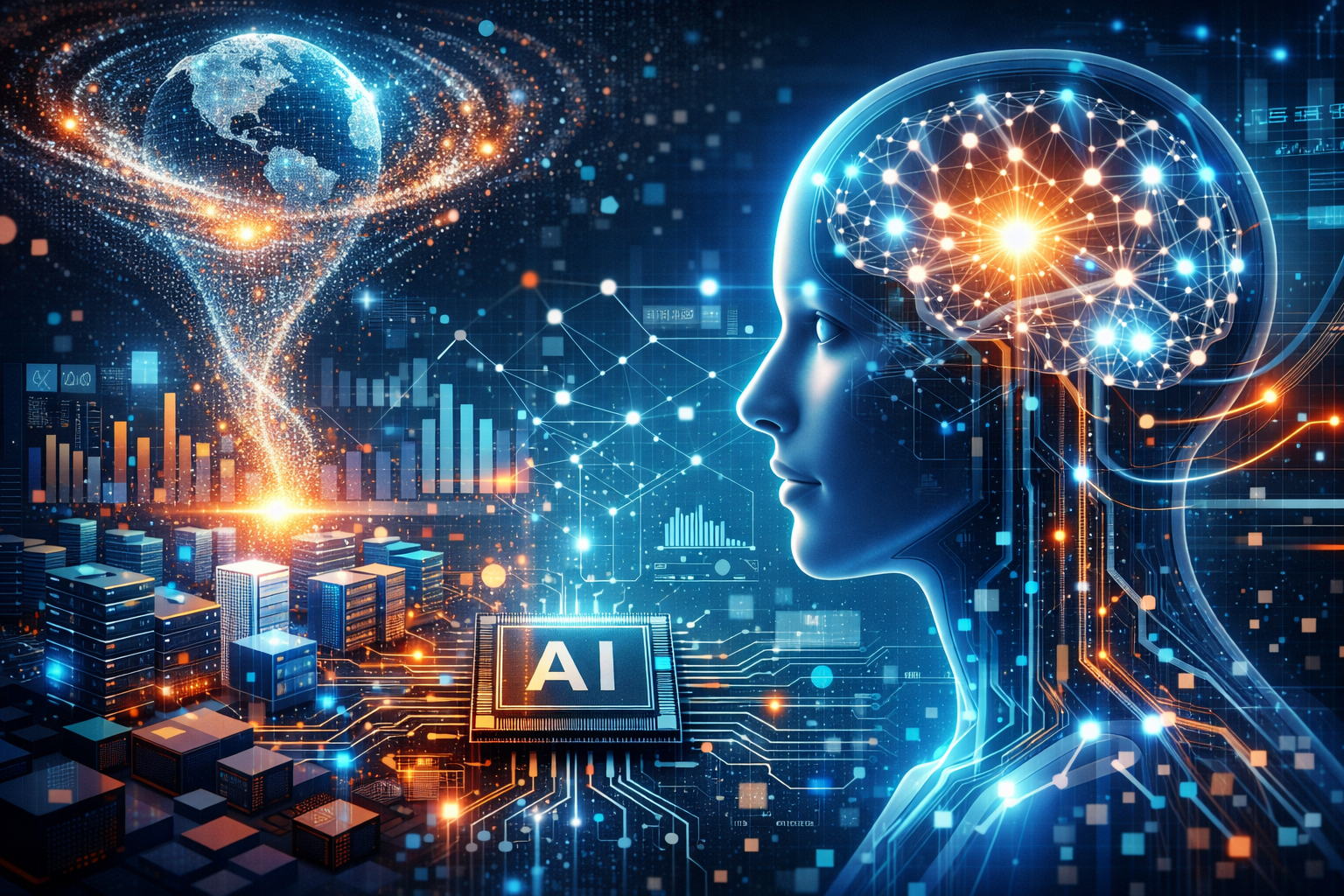
Why Big data is important in Artificial Intelligence
Big Data plays a central role in Artificial Intelligence because modern AI systems depend heavily on large volumes of data to learn, adapt, and make accurate decisions. AI models—especially in areas like machine learning and deep learning—require massive datasets to identify patterns, trends, and relationships. The more data available, the better the model can generalize and improve its predictions. For example, applications such as speech recognition, image classification, and recommendation systems become more accurate when trained on diverse and extensive datasets.
One of the main reasons big data is important is that it improves the accuracy and reliability of AI systems. When models are trained on diverse and massive datasets, they can generalize better and make more precise predictions. For example, applications such as speech recognition, recommendation systems, and medical diagnosis rely heavily on large datasets to function effectively. Big data also enables real-time processing, allowing AI systems to make instant decisions in dynamic environments like autonomous driving or financial trading.
What is Big Data?
Big Data refers to extremely large and complex datasets that cannot be easily processed, stored, or analyzed using traditional data processing tools. It involves data that is generated rapidly from multiple sources such as social media, sensors, mobile devices, and business transactions.
Explanation of Big Data
Data Sources
Big Data comes from multiple sources such as:
Social media platforms
IoT devices and sensors
Online transactions
Websites and mobile apps
Types of Big Data
Structured Data: Organized (databases, tables)
Unstructured Data: Raw data (images, videos, text)
Semi-structured Data: JSON, XML files
Technologies Used
Big Data requires special tools and frameworks like:
Hadoop – for distributed storage and processing
Apache Spark – for fast data analysis
NoSQL databases (e.g., MongoDB)
How Big Data Works
Data is collected from various sources
Stored in distributed systems
Processed using parallel computing
Analyzed to extract useful insights
Applications of Big Data
Healthcare (disease prediction)
Banking (fraud detection)
E-commerce (recommendation systems)
Smart cities and traffic management
Big Data is Implemented Using AI
Data Collection
Big Data is gathered from multiple sources such as:
Social media
Sensors and IoT devices
Websites and mobile apps
AI systems can automatically collect and organize this data efficiently.
Data Storage and Management
Because data is huge, it is stored in distributed systems using tools like:
Hadoop
Apache Spark
AI helps optimize storage by identifying useful vs unnecessary data.
Data Processing
AI algorithms process large datasets quickly:
Cleaning data (removing errors)
Transforming data into usable format
Handling structured and unstructured data
This step is crucial before analysis.
Data Analysis using AI Models
AI techniques such as:
Machine Learning
Deep Learning
Natural Language Processing
Example: Predicting customer behavior from shopping data.
Decision Making & Prediction
AI uses insights from Big Data to:
Make automated decisions
Provide recommendations
Predict future trends
Example:
Fraud detection in banking
Disease prediction in healthcare
Real-Time Processing
AI enables real-time analysis of Big Data:
Live traffic monitoring
Stock market prediction
Smart systems (e.g., smart cities)





.jpg)